Journal · Port Harcourt
Stories from Port Harcourt. Food, people and fresh ideas.
Food, produce, city life, events and practical drink guides from the place JuiceIN calls home.

Food, people and places from around the city.
Ingredients, ripeness and the choices behind a good drink.
Practical reads for everyday orders, offices and events.

Featured · Food & Culture
Bolé, fish and the fire that brings people together.
Roasted plantain and fish are simple ingredients. In Port Harcourt, the combination has become part of the city’s cultural shorthand.
Open featured storyThe Journal
Start with these stories.
Local culture, food, city life and practical JuiceIN reads.
Port Harcourt
Port Harcourt, in full colour: food, music and the city’s social energy.
The city is bigger than one stereotype. Food, live music, leisure spaces, markets and a strong culture of gathering all sit inside the Port Harcourt experience.
Food & Culture
Bolé, fish and the fire that brings people together.
Roasted plantain and fish are simple ingredients. In Port Harcourt, the combination has become part of the city’s cultural shorthand.
 Fresh Produce
Fruit Garden Market: what “fresh” looks like before it becomes a drink.
Freshness is not a marketing colour. It starts with real produce, real traders and ingredients that change with ripeness, handling and season.
 City Life
Pleasure Park and the slower side of Port Harcourt.
Port Harcourt is energetic, but not every good city moment needs a stage. Green space, water and an unhurried walk tell a different part of the story.
Occasions
Serving drinks for a Port Harcourt crowd: cold chain, timing and guest flow.
A good drinks setup is not only about choosing flavours. The operational details decide whether those drinks arrive cold, move quickly and make sense for the venue.
 JuiceIN
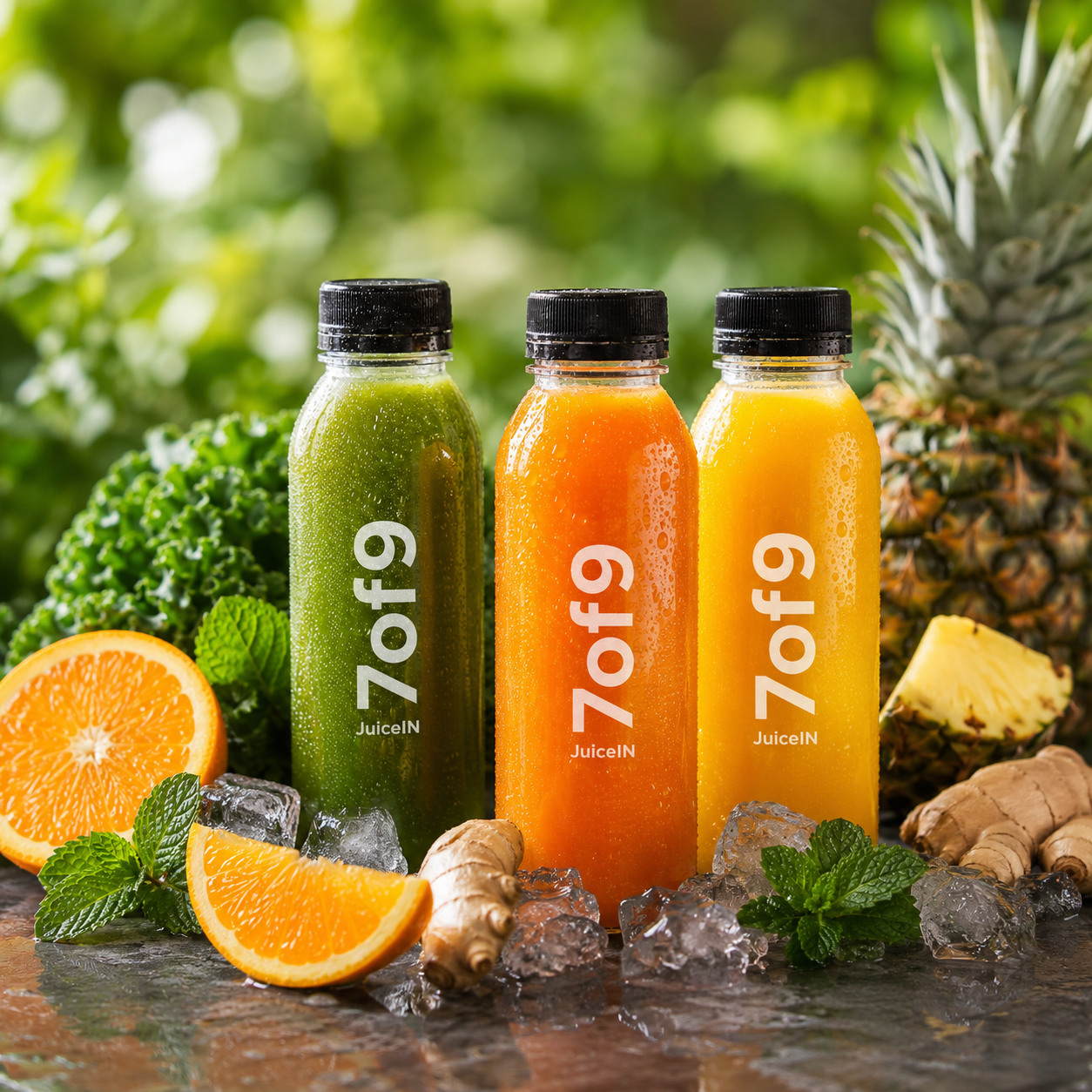
Fresh, cold, simple: why the best JuiceIN order does not need over-explaining.
A strong drinks menu should make the decision easier, not turn a bottle into homework. Start with flavour, temperature and the moment you are ordering for.
Keep reading
More to read.
Rivers flavours, local knowledge and practical JuiceIN guides.
 Rivers Cuisine
Beyond bolé: Rivers State has much more to say at the table.
Onunu, miniwuri, plantain porridge, seafood soups and pepper soup reveal a wider regional food story.
 People & Ideas
Port Harcourt is documenting itself — and that matters.
A local knowledge community is helping put more of Rivers State’s places, people and stories into public digital records.
Drink Guide
What should I drink today? A simpler way to choose your JuiceIN order.
Start with flavour and texture, then choose the size of the moment — everyday drink, larger order or event.
Newly published
Fresh additions.
Three more complete stories, ready to open now.

Cold drinks, warm city: why temperature changes the whole experience.
In Port Harcourt, chilling is not a finishing touch. It affects refreshment, flavour and the way a fresh drink arrives.
Read story ↗
Ripeness before recipe: the ingredient has the first say.
A recipe creates consistency, but fresh fruit still changes. Good drink-making begins by noticing what the ingredient is doing today.
Read story ↗
How to build a mixed JuiceIN order people will actually drink.
Variety works best when it is intentional: familiar fruit, something fuller, something sharper and enough quantity for the group.
Read story ↗Just added
Newest stories.
More practical JuiceIN reads, added as they are published.
City Notes
Port Harcourt, in full colour: food, music and the city’s social energy.
The city is bigger than one stereotype. Food, live music, leisure spaces, markets and a strong culture of gathering all sit inside the Port Harcourt experience.
Port Harcourt is often introduced through oil, industry and the wider Niger Delta. That is part of the city, but it is not the whole city. Spend time around its markets, food spots, event grounds, parks and social spaces and another picture appears: a place that likes flavour, music, movement and company.
The city gathers around food
Food is one of the easiest ways to understand that energy. Rivers State’s tourism agency describes the state’s cuisine as closely connected to its natural environment, with fish, plantain, seafood, pepper, greens and palm oil appearing across traditional dishes. In Port Harcourt, bolé and fish is one of the most visible examples: roasted plantain, fish and a pepper-rich sauce served with very little ceremony and a lot of flavour.
The strength of that food culture is visible in public events too. Bolé Festival describes itself as a Port Harcourt celebration of food, Afrobeats, culture and community. The important part is not the scale of the event; it is what the event says about the city. People come to eat, listen, dance, meet friends, discover brands and spend time together. The food becomes a reason to gather.
There is a softer Port Harcourt too
The city’s social life is not only nightlife or festivals. Port Harcourt Pleasure Park gives a different kind of energy: green space, water, walking paths and recreation. Markets such as Fruit Garden in D-Line show another everyday layer — traders, produce, colour and the practical rhythm of buying food in a busy city.
Those different spaces matter for a brand like JuiceIN because people do not drink in one context. A bottle can be part of a workday, a drive across town, lunch, a family gathering, an event or a quiet afternoon. The city changes around the drink.
What “Port Harcourt energy” should mean for JuiceIN
It should not mean forcing a stereotype into the brand. It should mean being comfortable with where the brand is from. The tone can be bright without becoming noisy. Presentation can be clean without feeling imported from somewhere else. Fresh drinks can sit naturally beside Nigerian food, local events, offices, homes and weekends.
The strongest local brands do not need to explain the city every time they speak. They simply feel at home in it. For JuiceIN, that means flavour first, clear service, chilled drinks, good presentation and enough personality to belong in Port Harcourt without pretending to represent every part of it.
Port Harcourt Food
Bolé, fish and the fire that brings people together.
Roasted plantain and fish are simple ingredients. In Port Harcourt, the combination has become part of the city’s cultural shorthand.
Some foods become associated with a place because they are complicated. Bolé is almost the opposite. The basic idea is direct: plantain meets fire, fish brings richness, pepper sauce brings heat and moisture. What makes it memorable is the combination, the smoke and the way it is eaten.
Fire changes the plantain
Roasting gives plantain a texture and flavour that frying does not. The outside picks up char while the inside softens. Unripe plantain stays more savoury; riper plantain becomes sweeter. Fish gives the meal weight, while pepper sauce ties the plate together with spice, oil and acidity.
The Rivers State Tourism Development Agency includes roasted plantain and fresh fish among the state’s traditional cuisines. Its description connects the food to the wider riverine environment of Rivers State, where fish and plantain are familiar ingredients.
Why it feels like Port Harcourt
Bolé is not valuable because it can be turned into a slogan. It matters because people actually eat it. It can be bought quickly, shared, eaten outdoors and adapted by different vendors. There is no need for every seller to produce an identical plate for the food to remain recognisable.
That everyday familiarity helps explain why the annual Bolé Festival works as a cultural event. The organisers build around food, music, fashion, games and connection. A familiar dish becomes the centre of a much bigger social experience.
A useful lesson for fresh drinks
JuiceIN should not try to imitate bolé. The better lesson is about clarity. A strong product does not need unnecessary complexity. If a cane drink is meant to taste of cane, lime and ginger, those flavours should be clear. If a watermelon juice is meant to be fresh and cold, the experience should not be buried under extra ideas.
Good food culture often understands this instinctively: know what the product is, prepare it properly and serve it in a way that makes sense. That principle travels well from a grill to a bottle.
D-Line
Fruit Garden Market: what “fresh” looks like before it becomes a drink.
Freshness is not a marketing colour. It starts with real produce, real traders and ingredients that change with ripeness, handling and season.
“Fresh” can become a vague word very quickly. Visit a produce market and it becomes practical again. Fruit has weight, smell, colour, bruises, ripeness and season. Some pieces are ready now. Others need time. Some are perfect for juicing; some are not.
A market makes the ingredient visible
Fruit Garden Market in D-Line, Port Harcourt has been documented by photographers showing traders and produce including mangoes, peppers, pineapple, tiger nuts, soursop, lime and other food items. The value of those images is simple: they place fresh produce inside the real daily economy of the city.
For a juice business, the ingredient comes before the recipe. A ripe pineapple is not identical to one picked earlier. Watermelon varies in sweetness. Citrus can be beautifully bright or sharply acidic. Mango can move from firm and floral to soft and intensely sweet.
Consistency is a skill, not denial
A fresh-drink menu still needs consistency. The answer is not to pretend natural ingredients never vary. The answer is to taste, measure, handle and chill carefully. A recipe creates a target; good preparation is what gets the ingredient as close to that target as possible.
Sometimes the best decision is also availability. If an ingredient is not good enough, forcing it into a drink only protects the menu name, not the customer experience. Clear communication is better: explain what is available and offer an alternative.
The market is context, not a sourcing claim
It is important to separate local editorial storytelling from procurement. Showing Fruit Garden Market on the Journal does not mean JuiceIN buys from that market. Supplier relationships should only be stated when they are actually true and documented.
What the market does represent is the broader Port Harcourt food environment around the brand — traders, produce, colour and the everyday movement of ingredients through the city.
Garden City
Pleasure Park and the slower side of Port Harcourt.
Port Harcourt is energetic, but not every good city moment needs a stage. Green space, water and an unhurried walk tell a different part of the story.
There is an easy mistake to make when describing Port Harcourt: focus only on movement. Traffic, work, events, music, food, business — all true. But cities also need places where nothing urgent is required.
A different visual language
Port Harcourt Pleasure Park offers a calmer image of the city: landscaped green areas, walking paths, water and recreational space. Photographs of the park show a setting that feels deliberately separated from the hard edges of the road outside.
That contrast is useful. It reminds us that “Port Harcourt lifestyle” is not one mood. There are loud nights and quiet mornings, packed event grounds and open park paths, workdays and family time.
Why this belongs in a drinks Journal
A fresh-drink brand lives in those ordinary pauses too. A smoothie does not need an event to make sense. A juice can be part of a Saturday drive, a break between errands or a quiet afternoon. The more useful a product becomes, the less it needs a special occasion.
That is also a design lesson for JuiceIN. Every section of the brand does not need maximum visual volume. Bright colour can sit beside breathing room. Premium can mean restraint. A photograph can do the work without being covered in text.
The Garden City idea
Port Harcourt has long carried the “Garden City” nickname. Whatever the city’s present-day realities, green public spaces still give that phrase a visual reference point. Pleasure Park is one of the clearest examples visitors can actually experience.
For the Journal, the value is not to advertise the park. It is to show a more complete city: one with energy and rest, food and landscape, crowds and quieter space.
Events
Serving drinks for a Port Harcourt crowd: cold chain, timing and guest flow.
A good drinks setup is not only about choosing flavours. The operational details decide whether those drinks arrive cold, move quickly and make sense for the venue.
Events make simple service problems visible very quickly. A drink can taste excellent and still create a poor experience if guests cannot get it easily, if it warms up before service, or if the setup is wrong for the venue.
Guest count is only the first number
Start with how many people are expected, but do not stop there. Fifty guests arriving within thirty minutes create a different service pattern from fifty guests moving through a venue over five hours. The timing affects stock, ice, staffing and how quickly drinks need to be accessible.
Temperature is part of the product
If a drink is designed to be served chilled, cold-chain planning matters from dispatch to handover. Travel time, cooler capacity, ice, refrigeration at the venue and holding time all affect the final experience. “Cold” should not be something the service team tries to solve after arrival.
Venue access changes the setup
Before choosing a service style, ask practical questions. Can a vehicle reach the setup area? Is there reliable power? Is the drinks point indoors or outside? Is there space for coolers? Will guests queue in one direction or approach from several sides?
Those details help decide whether simple delivery is enough or whether a staffed JuiceIN Pop-Up is the better fit. Delivered service works when the organiser already has serving covered. Full Pop-Up Service makes more sense when JuiceIN is expected to manage the drinks presence at the venue.
Keep the menu realistic
A very wide event menu can slow service and create stock imbalance. A focused mix is usually easier to understand and faster to serve. That mix might include familiar fruit juices, a cane option, one or two smoothies and smaller-format JuiceIN Shots depending on the event.
Plan early enough to quote properly
The more complete the request, the more useful the quote can be. Date, venue, guest count, service duration and preferred setup give the team something real to plan around. Without them, a quote is only an estimate built on assumptions.
From the Brand
Fresh, cold, simple: why the best JuiceIN order does not need over-explaining.
A strong drinks menu should make the decision easier, not turn a bottle into homework. Start with flavour, temperature and the moment you are ordering for.
Fresh drinks can become surprisingly complicated when a menu tries to say too much. Ingredients, benefits, categories, sizes, pairings, add-ons — useful information can quickly become noise. Most customers start somewhere simpler: what do I feel like drinking?
Start with flavour
If you want something bright and fruit-forward, start with the juices. If you want a fuller texture, move toward smoothies. If you want cane, decide whether you want it straight or with citrus and ginger. If you want something smaller and punchier, look at JuiceIN Shots.
That first decision should be intuitive. Product detail can come after.
Cold matters more than clever copy
A fresh drink that is supposed to be chilled needs to arrive chilled. Temperature changes aroma, sweetness, refreshment and the overall sense of quality. It is one of the reasons how the drink arrives matters as much as the recipe.
Presentation should help the drink
Good presentation is not decoration for its own sake. A clean bottle, clear label, neat pack and organised handover make the order easier to understand and easier to trust. The same principle applies online: product photography should show the drink properly, prices should be readable and the next action should be obvious.
Order for the moment
An everyday order and an event order are different jobs. One person choosing lunch can follow taste. An office restock needs quantity and variety. A Pop-Up needs guest flow, venue information and service planning. The drink may be the same, but the context changes the order.
That is why JuiceIN now separates the menu, larger orders and Catering & Events more clearly. The customer should not have to decode the business structure before choosing what they need.
Simple is not basic
Keeping an experience simple requires discipline. The menu has to be organised. Images have to be accurate. Product details have to be clear. Availability has to be communicated. The final total or service quote has to be confirmed before payment.
When those things work, the customer gets to focus on the enjoyable part: choosing the drink.
Rivers Cuisine
Beyond bolé: Rivers State has much more to say at the table.
Bolé may be the easiest Port Harcourt food reference to recognise, but the regional table is broader — yam and plantain, okazi, fish, seafood, pepper, pumpkin leaf and palm oil all appear across traditional dishes documented in Rivers State.
Port Harcourt and bolé are closely linked in popular food culture, but stopping at roasted plantain and fish leaves a lot of Rivers State cuisine unexplored. The Rivers State Tourism Development Agency documents a much wider set of traditional dishes, shaped by the state’s riverine environment, agricultural ingredients and different communities.
Onunu brings yam and ripe plantain together
Onunu — also described by the tourism agency as Onunu/Odu — combines yam with overripe plantain and palm oil, pounded into a soft, rich mash. The same recipe page pairs the preparation with fresh fish, pepper, onion and garden tomato. The appeal is in the contrast: savoury yam, the sweetness of ripe plantain and the depth of palm oil.
Minwuri shows another side of Ikwerre cooking
The agency lists Miniwuri as an Ikwerre delicacy made with ground okazi, egusi, palm oil, crayfish and dry fish or meat. It is the kind of dish that immediately widens the idea of “Rivers food” beyond one street-food favourite. Greens, seeds, fish and palm oil are doing different work here — texture, body, aroma and richness.
Seafood keeps returning for a reason
Rivers State’s cuisine page repeatedly returns to fish and seafood. Its garden seafood soup includes Atlantic fish, snails, prawns and pumpkin leaf; Finantiengi is described as a spiced fish preparation; Ikili pepper soup uses fish, native spices, fresh pepper and scent leaf. The exact recipes and names belong to specific communities and traditions, but the broader pattern makes sense in a riverine state.
Plantain has more than one job
Plantain appears roasted in bolé, mashed into onunu and cooked into porridge. That range is a useful reminder that a familiar ingredient can carry completely different flavours depending on ripeness and technique. The same principle is true in drinks: ingredient identity matters, but preparation decides the experience.
For JuiceIN, this wider food context matters because a local drinks brand should understand the table it sits beside. The goal is not to turn traditional dishes into marketing devices. It is to recognise that Port Harcourt customers already live inside a rich flavour culture — smoky, spicy, savoury, fresh and often built for sharing.
People & Ideas
Port Harcourt is documenting itself — and that matters.
A city is not only the landmarks outsiders already know. Local people recording streets, communities, places and knowledge help make the digital picture of Port Harcourt more complete.
There is a quiet kind of city-building that happens away from construction sites: people documenting what already exists. A road gets photographed. A neighbourhood gains a better description. A local place is added to a map or public database. A story that would otherwise stay local becomes easier for the rest of the world to find.
A Port Harcourt community is doing that work
In 2025, the Port Harcourt Wikimedia Nigeria Hub was one of the communities involved in Nigeria’s WikiForHumanRights campaign. The campaign page lists Port Harcourt alongside other Nigerian communities and records targets that included improving or creating articles, Wikidata entries, media uploads and Wikivoyage content.
The same campaign records a mix of new and experienced contributors in the Port Harcourt community. Photographs from the programme show participants taking part in local sessions — a small but useful example of Africans creating and improving knowledge about their own environment rather than waiting for somebody elsewhere to describe it for them.
Why local documentation matters
Search for a major global city and the internet usually has endless angles: street photographs, neighbourhood guides, food history, public spaces, businesses, archives and cultural context. Many African cities are still documented unevenly online. That means ordinary local knowledge can be disproportionately valuable.
Port Harcourt has many stories that do not fit neatly into the familiar headlines about oil or the Niger Delta. Pleasure Park, Fruit Garden Market, local food, neighbourhood streets, creative communities, riverside areas and everyday social life all help produce a fuller picture.
Brands can contribute without pretending to be historians
A brand Journal has a smaller role, but it can still be responsible. Use real images when possible. Credit photographers. Say exactly where an image was taken. Separate editorial context from commercial claims. Do not imply partnerships that do not exist. And avoid reducing the city to generic “African” imagery when Port Harcourt itself can be shown.
That is the standard this Journal should keep: local enough to feel grounded, careful enough to be credible, and positive without becoming artificial.
Drink Guide
What should I drink today? A simpler way to choose your JuiceIN order.
You do not need to study the whole menu. Start with the kind of flavour and texture you want, then match the order to the moment.
A drinks menu should make choosing easier. When every product is competing for attention, the simplest starting point is not ingredients, price or category labels. Ask what you actually feel like drinking.
If you want something clean and fruit-forward
Start with the juices. Think about whether you want a single-fruit flavour or something with more contrast. Watermelon and pineapple are direct. Cane drinks can move from simple and mellow to sharper combinations with lime or ginger. Green blends bring a different profile again.
If you want more body
Move toward smoothies. Blending changes the experience: thicker texture, slower drinking and a fuller feel. Fruit-led smoothies stay bright; creamier options lean richer. The right choice is less about which category sounds healthiest and more about what texture suits the moment.
If you want something small and punchy
JuiceIN Shots are the compact route. Ginger, turmeric, citrus and hibiscus combinations are designed around stronger flavour in a smaller bottle. They work differently from a full juice or smoothie, so they should be chosen because that smaller, sharper format is what you want.
Then decide how big the moment is
One or two drinks for lunch belong on the normal menu. An office restock, meeting or larger group moves into Larger Orders, where quantity and mix matter more. Catering, Baking and JuiceIN Pop-Up belong to occasions that need planning around date, guests, venue or service.
That separation is useful because a product decision and a service decision are not the same thing. First choose what people are drinking. Then choose how the order needs to arrive.
Do not forget temperature
Whichever route you take, chilled service matters. Cold temperature is part of the final drink experience, especially in Port Harcourt’s warm climate. It affects how refreshing the drink feels and how the flavour comes across at handover.
Port Harcourt Living
Cold drinks, warm city: why temperature changes the whole experience.
Fresh flavour matters, but temperature decides how refreshing that flavour feels when the bottle finally reaches you.
A fresh drink can be well made and still feel disappointing if it reaches the customer too warm. For JuiceIN, serving temperature is part of presentation: the aim is for a chilled drink to reach the customer chilled and ready to enjoy.
Cold changes perception
Serving temperature changes the sensory experience. A chilled fruit drink can feel crisper; as it warms, its aroma and sweetness may become more noticeable.
The journey matters
The bottle does not jump from production to the customer's hand. It may move through storage, packing, dispatch and traffic before delivery or collection. Each stage can affect temperature. That is why coolers, ice packs, refrigeration and sensible dispatch timing are operational decisions rather than decoration.
Events make the challenge larger
For a small order, keeping a few bottles cold is relatively straightforward. For a larger order or event, the question changes: where will the drinks wait, how quickly will they be served, and what cold storage is available at the venue?
A good service plan deals with those questions before arrival. Delivered orders need a clear handover point and onward chilling. A full JuiceIN Pop-Up needs enough cold capacity to support the expected service period and guest flow.
Presentation starts before the label
A polished bottle and clean packaging matter, but temperature is part of presentation too. The customer notices it immediately. The aim is simple: the drink should arrive in the condition that best represents the flavour it was made to deliver.
Fresh Produce
Ripeness before recipe: the ingredient has the first say.
Fresh fruit is not manufactured to one exact setting. Good preparation begins by recognising that variation rather than hiding it.
A recipe is a target. Fresh produce is the variable. That distinction matters because fruit changes from batch to batch: sweetness, acidity, water content, aroma and texture all move with variety, ripeness, season and handling.
Two ripe fruits can still be different
A pineapple can smell intensely sweet before it is cut, while another may be brighter and more acidic. Mango can move from floral and firm to soft and almost honeyed. Watermelon can be deeply flavoured or mild. Citrus can be balanced one day and sharply tart another.
Tasting is part of consistency
Consistency does not mean pretending those differences do not exist. It means using technique to manage them. Taste the ingredient. Measure the recipe. Keep preparation clean. Chill correctly. If the flavour is outside the useful range for a product, adjust within the recipe or choose a better ingredient.
Availability can be the more professional answer
Sometimes an ingredient simply is not at its best. A menu that works with fresh produce needs room for that reality. It is better to communicate availability clearly than to force a weak ingredient into a drink because the product name is expected to be there every day.
Local produce should be shown honestly
Fruit Garden Market in Port Harcourt gives this Journal a real visual context for fresh produce, but it should not be confused with a supplier declaration. A regional photograph can show what fruit looks like in the city's everyday food environment without implying that JuiceIN purchased the photographed produce.
The real standard is simpler: the ingredient should be good enough for the drink being made. Everything else — recipe, bottle, label and presentation — comes after that decision.
Drink Guide
How to build a mixed JuiceIN order people will actually drink.
More choice is not automatically better. A useful mixed order gives people enough variety without turning the table into a guessing game.
Mixed drinks orders are useful for offices, meetings, family gatherings and events because not everybody wants the same flavour. The mistake is assuming that variety means ordering one of everything. A better mix is structured.
Begin with familiar flavours
Start with drinks that are easy for most people to understand quickly. Familiar fruit flavours such as pineapple or watermelon can form the centre of the order. They give guests a straightforward choice before they explore something more distinctive.
Add one or two drinks with more character
Cane combinations with lime or ginger can give the order another direction. A green blend or a stronger ginger profile can do the same. The point is contrast, not complexity.
Decide whether smoothies belong in the mix
Smoothies bring a different texture and usually feel more substantial. That can be useful for breakfast meetings, daytime events or any setting where some guests may want something fuller than juice. For a fast-moving event, however, a more focused bottled-juice selection may be easier to serve.
Use JuiceIN Shots deliberately
Shots should not simply be added because the bottles are small. Their flavour is more concentrated. Include them when that sharper, smaller-format experience suits the group or the occasion.
Match quantity to the event, not just the guest list
Guest count is the starting point, but duration and service style matter too. A short meeting, all-day office restock and evening event may have the same number of people but very different consumption patterns.
For larger quantities, send the expected number of people, timing and the kind of mix you want. The aim is to build an order that feels varied when it arrives and sensible when the last bottle is taken.
Drink Guide
Four fruit flavours to try when the day is hot.
Orange, pineapple, watermelon and cucumber-lime each bring a different kind of refreshment. The easiest choice starts with the flavour profile you want.

A hot day does not always call for the same drink. Sometimes you want something bright and citrusy; sometimes you want fruit that feels softer and sweeter. The useful way to choose is not to rank one flavour above another, but to understand what each one brings.
Orange: bright, familiar and easy to reach for
Orange sits in a familiar place for most people. It is naturally citrus-led, aromatic and easy to understand before the bottle is opened. When properly chilled, it works well as an everyday drink because the flavour is clear without needing explanation.
Pineapple: fuller tropical sweetness
Pineapple usually feels rounder and more intensely tropical than orange. It can carry both sweetness and acidity, which makes it useful when you want something fruit-forward but still lively. It is also a strong option in a mixed order because it contrasts well with lighter flavours.
Watermelon: light, juicy and straightforward
Watermelon is about simplicity. Its light, juicy character can feel easy to drink when served properly chilled. It is a good choice when you do not want heavy texture or sharp citrus.
Cucumber-lime: crisp rather than sweet-led
Cucumber and lime move in another direction. Cucumber brings a fresh, green character while lime gives the drink a sharper edge. It works well for customers who want something less obviously sweet and more refreshing in profile.
The best choice is the one that fits the moment
For one person, choose by taste. For a mixed office or event order, combine different flavour directions: familiar citrus, tropical fruit, something lighter and something sharper. That gives people real choice without turning the selection into a long list.
Office Guide
Planning juice for an office meeting in Port Harcourt.
A useful office order comes down to four things: number of people, drink mix, timing and a clear delivery or collection plan.

Office drinks are easiest to organise when the order is treated like a small service plan rather than a collection of individual requests. You do not need every person to choose from the entire menu. You need enough variety for the team, the right quantity and a delivery time that makes sense for the meeting.
Start with the real headcount
Know how many people are expected and whether every person needs one bottle or whether the drinks are going into a shared refreshment point. A meeting with 12 people is different from an office restock for 30 people who will take drinks over several hours.
Keep the flavour mix short
Three or four well-chosen options are usually easier than a very wide selection. Use familiar fruit flavours as the centre, then add one cane, ginger-led or smoothie option for contrast. A shorter selection is easier to confirm, pack and distribute.
Match the drink type to the meeting
Juices work well when you want something light and easy to hand out. Smoothies can suit breakfast or longer daytime meetings where some people may want a fuller drink. JuiceIN Shots can be included as a smaller-format extra when that sharper flavour style fits the group.
Give the timing, not just the date
If the meeting starts at 10:00, say so. “Tomorrow morning” is less useful than a real deadline. The required time affects preparation, dispatch and how early the drinks should arrive before people enter the room.
Make the handover simple
Share the office address, a reliable contact number, the person receiving the order and any access information that helps. If collection is easier, confirm who will collect and when.
Serving Guide
How to keep fresh juice chilled and tasting its best.
The bottle should stay cold from handover until you are ready to drink it. Good chilled handling protects the experience you ordered.
Fresh drinks are made to be enjoyed cold. Once the order reaches you, the goal is straightforward: keep the bottles chilled, avoid unnecessary time in warm conditions and only bring out what is needed for immediate serving.
Move the order into cold storage quickly
After delivery or collection, transfer the bottles into suitable refrigeration or a properly prepared cooler rather than leaving the full order on a table or inside a warm vehicle. For meetings and events, plan the storage point before the drinks arrive.
Serve in smaller batches
For a larger gathering, there is no need to place every bottle out at once. Keep most of the stock chilled and release smaller quantities as guests take drinks. This keeps later bottles closer to the intended serving temperature.
Think about the handover point
If the order is being received at an office, event venue or home, make sure the person taking delivery knows where the drinks are going next. A clear handover prevents a chilled order from waiting unnecessarily while somebody looks for storage space.
Opened and unopened bottles are different jobs
Once a bottle is opened, treat it as something to finish promptly rather than something to leave sitting out for long periods. Unopened bottles should remain properly chilled until they are needed.
For events, cold capacity is part of planning
Guest count and service duration affect how much cold storage is needed. A short meeting may need only simple refrigeration. A longer event or Pop-Up requires enough cooler or refrigeration capacity for the full service window.
Drink Guide
Fresh juice or smoothie: what fits your day?
Juice is lighter and more direct; a smoothie brings more body and texture. Choose by the kind of drinking experience you want.
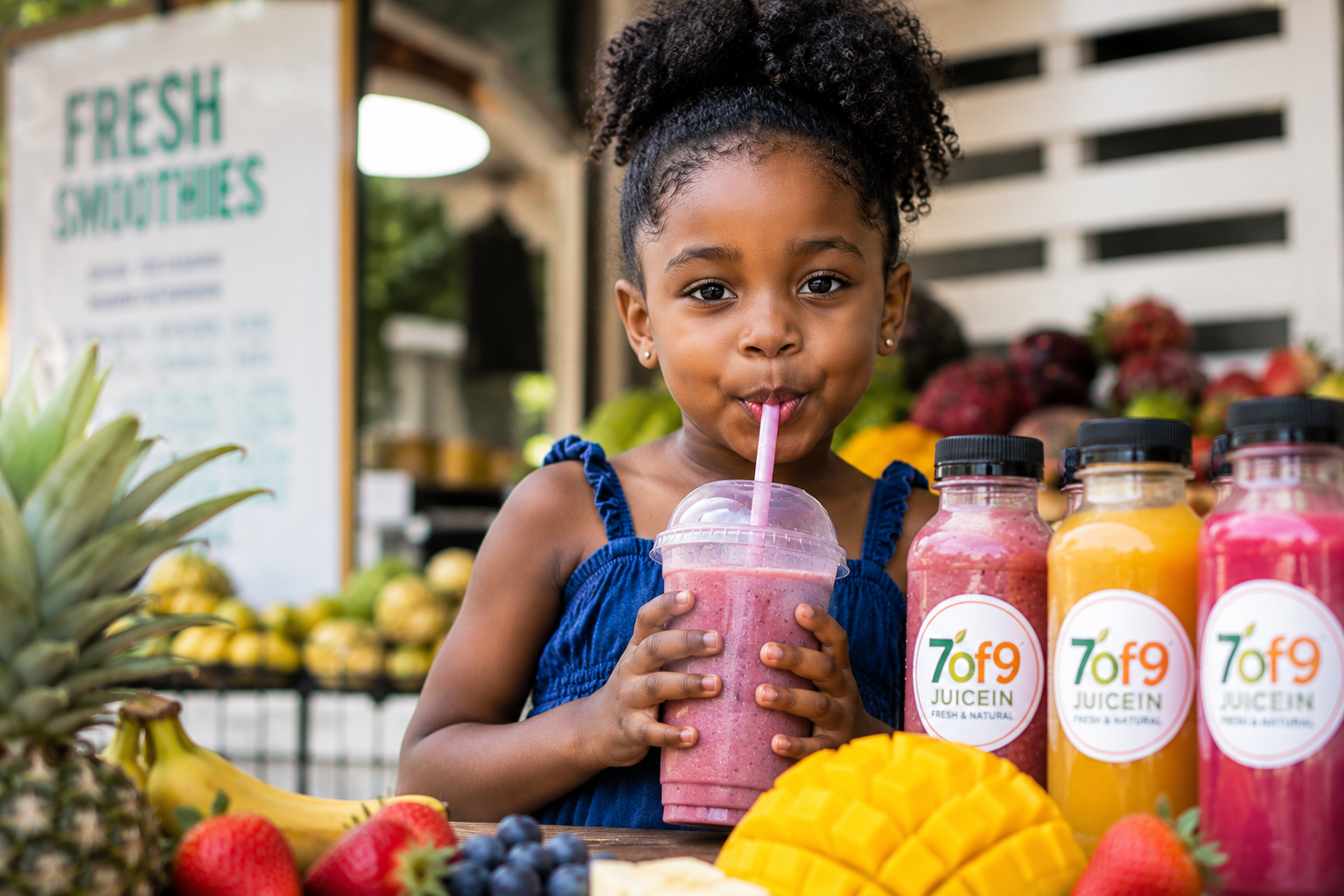
The easiest way to choose between juice and a smoothie is to ignore the category names for a moment and think about texture. Do you want something light, clean and easy to drink, or something thicker that feels more substantial?
Choose juice when you want light refreshment
Juices put the fruit flavour first without the thicker texture of a blended drink. They work naturally with lunch, a short break, meetings and hot-day refreshment because they are easy to drink and easy to serve.
Choose a smoothie when you want more body
A smoothie is blended to create a fuller texture. That makes it a different experience even when some of the fruit flavours overlap with the juice menu. It can suit breakfast, daytime meetings or moments when you want something that feels more substantial.
Think about how fast the drink needs to move
For an event or large office order, bottled juices can be especially straightforward to distribute quickly. Smoothies can still be part of the mix, but it may be better to keep the smoothie selection smaller and intentional rather than offering too many blended choices.
Use flavour as the second decision
After texture, choose the profile. Fruit-led options keep things bright. Creamier smoothie directions feel richer. Cane and citrus drinks bring another type of freshness entirely. The menu becomes easier once you decide what kind of experience you are looking for first.
Event Guide
What to send before booking a JuiceIN Pop-Up.
A useful request gives the team enough information to understand the event before discussing the final setup and quote.
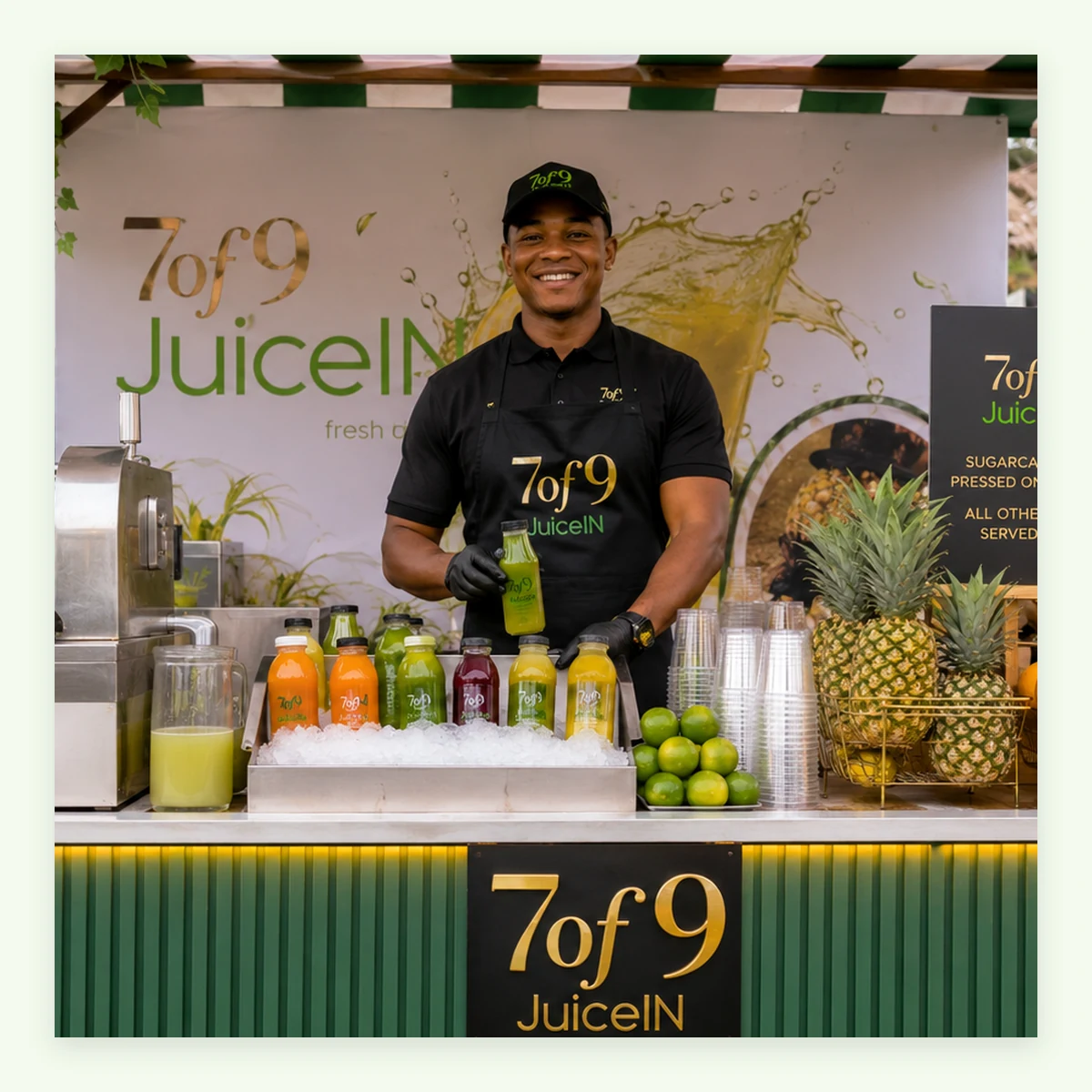
A JuiceIN Pop-Up request is easier to plan when the first message includes the important event details. The goal is not to make the enquiry complicated. It is to avoid building a service quote around guesses.
Start with the event type and date
Say what the occasion is — office day, birthday, private gathering, brand activation or another event — and provide the required date. The event type helps the team understand the expected pace and style of service.
Add the venue and location
Share the venue name or exact area in Port Harcourt and any access information that matters. Setup logistics change depending on where vehicles can stop, where the drinks station can sit and how far equipment must be moved.
Give the expected guest count
Guest count affects stock, serving pace, cold capacity and the overall setup. If the number is not final, give the best realistic estimate and say that it may change.
State the service window
Include the approximate time guests arrive, when service should begin and how long the drinks setup is expected to operate. A two-hour office activation and an evening event need different planning even with the same number of guests.
Choose the service direction
If you already know whether you want Delivered service or a Full Pop-Up Service, say so. If you are not sure, describe the event and what you expect JuiceIN to handle so the team can advise which route fits better.
Add any drink direction
You do not need the final menu before enquiring, but it helps to say whether you are thinking about fruit juices, cane drinks, smoothies, JuiceIN Shots or a mixed selection.
Baking by Shades Yummie
Baking orders for birthdays, boxes and small hosting.
A useful baking request should tell Shades Yummie what you want, how much you need, the date and the finish or serving style you have in mind.
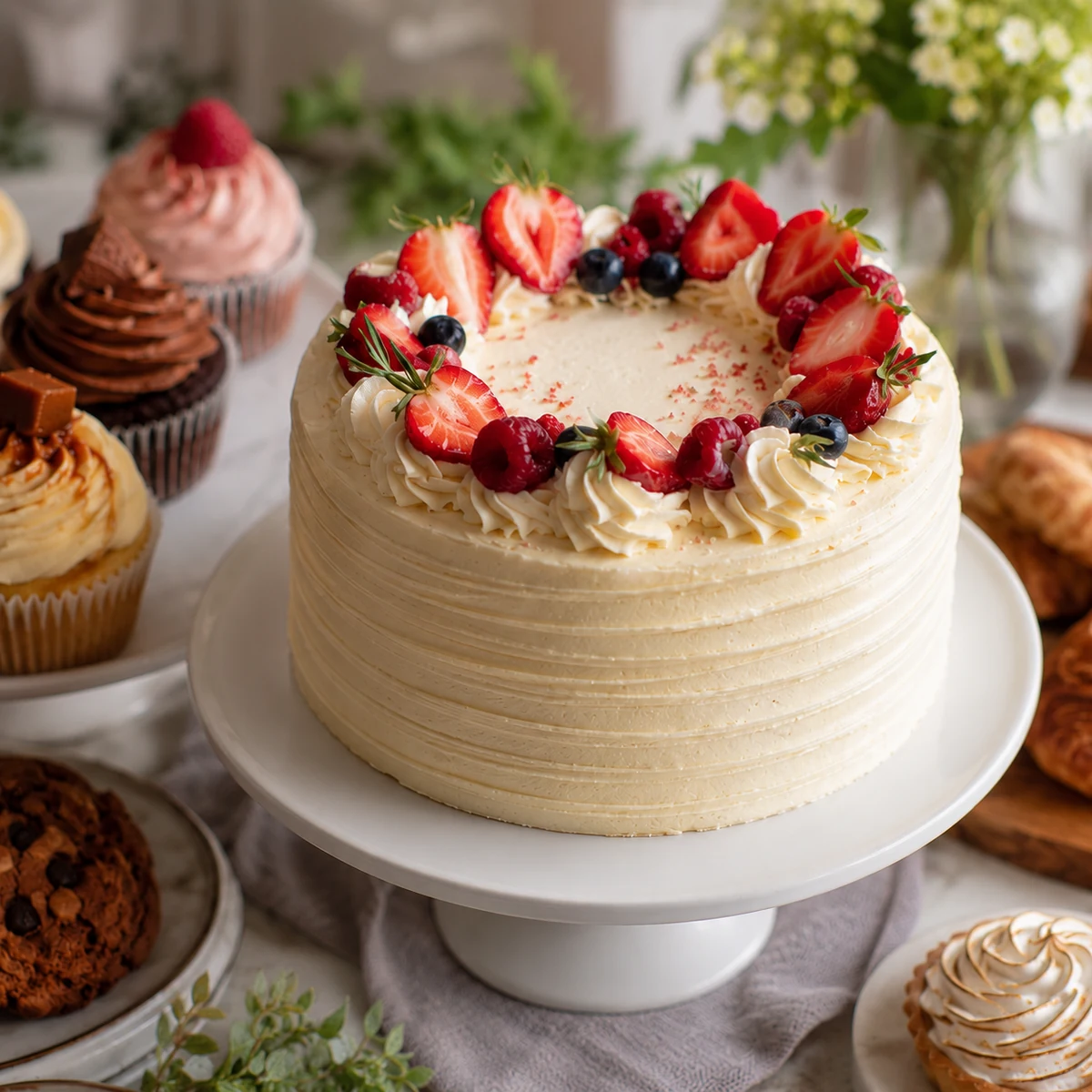
Baking orders become much easier to review when the request describes the actual occasion. A birthday cake, cupcake box, pastry selection and office snack order may all come from the same Baking service, but they need different information.
For a celebration cake, start with the occasion
Say what the cake is for and the date it is needed. Then add the preferred size or number of people it should serve, flavour direction, colours and any inscription or design reference. If you have an inspiration image, include it as a reference rather than assuming the exact design can be copied without discussion.
For cupcakes and boxes, quantity comes first
Boxed treats are easier to plan when the quantity is clear. State whether the order is for gifting, office sharing or a celebration table, then give the number of boxes or pieces required.
For small hosting, think about how people will eat
A snack or pastry selection should fit the occasion. A small meeting may need individually easy-to-serve items. A family gathering may work better with a mixed box. The request should explain the number of people and how the food will be served.
Add JuiceIN drinks only when they help the occasion
JuiceIN drinks can be paired with a Baking request, but the food and drink sides remain distinct: Baking is by Shades Yummie; drinks are by JuiceIN. If you want both, mention the drink quantity or ask for a suggested mix.
Pricing is confirmed through the request
Baking is handled by enquiry rather than a fixed public price list. The final quote depends on the item, size, quantity, finish, date and other request details, and is confirmed before payment.